


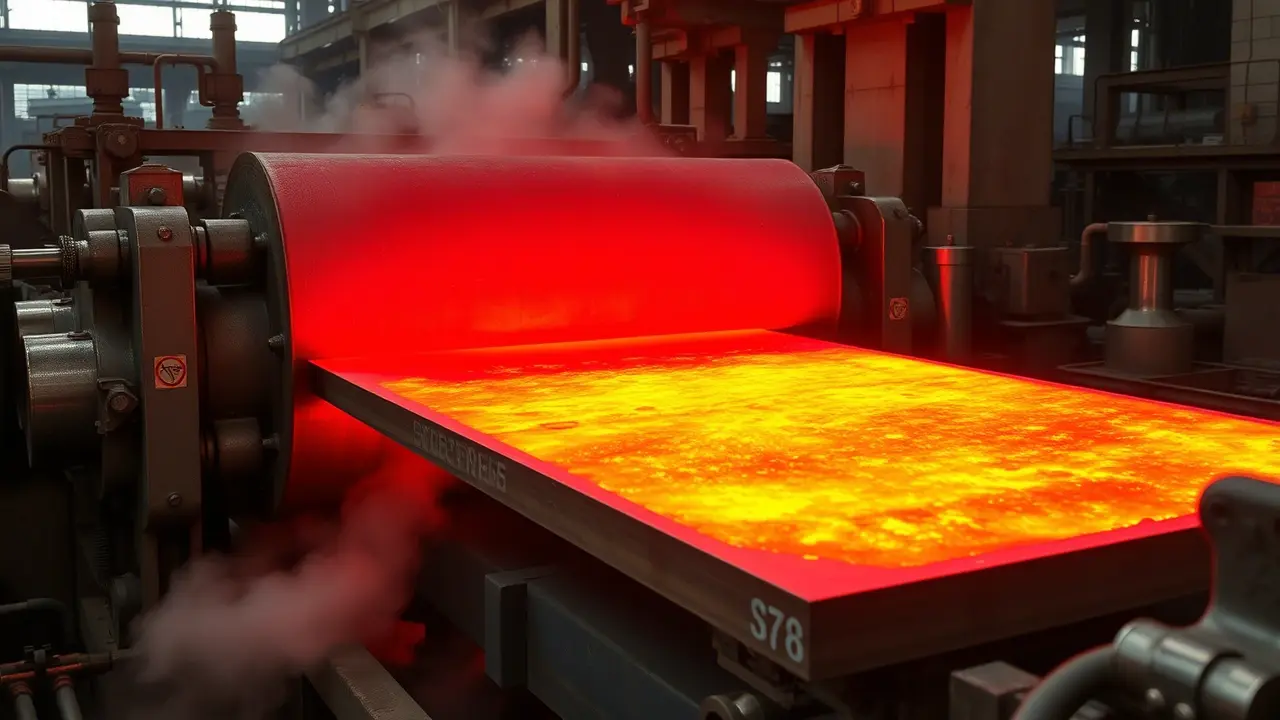

Heavy steel plates are a cornerstone of modern industry. From towering bridges and oil rigs to massive ship hulls and pressure vessels, these plates form the foundation of strength and stability. But before these steel plates can take on such demanding roles, they often need a process that transforms their core properties — heat treatment.
In this blog, we’ll dive into what heat treatment is, its various types, why it’s critical for heavy steel plates, and how Global Steels ensures you receive high-performance, heat-treated plates for every need.
Let’s explore.
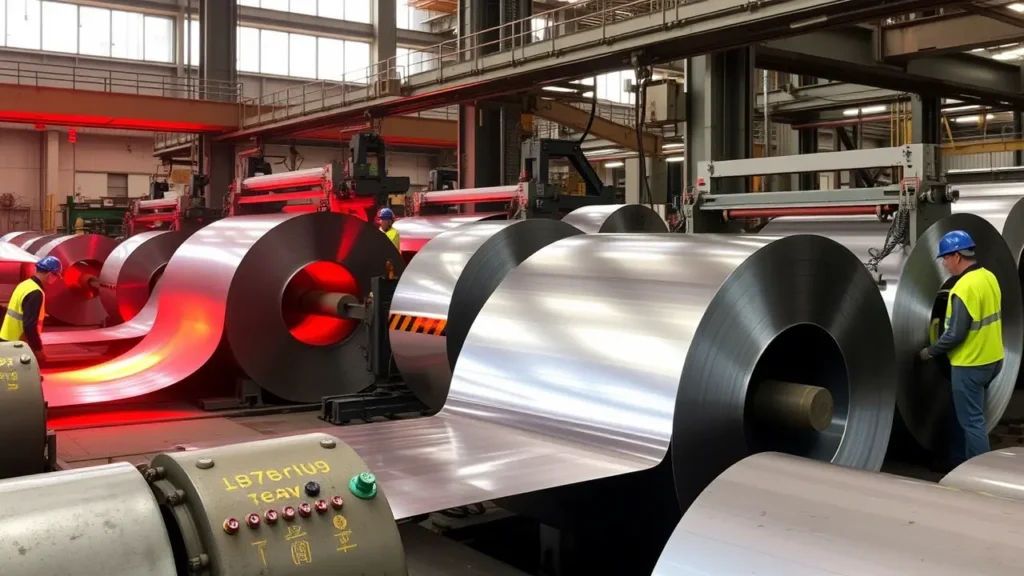
1. What is Heat Treatment?
Heat treatment is a thermal process that involves heating and cooling steel under precise conditions to alter its internal structure (known as the microstructure) to achieve specific mechanical and physical properties. Unlike surface treatments, heat treatment affects the entire thickness of the steel plate.
Primary Goals of Heat Treatment:
- Improve mechanical strength
- Enhance toughness and ductility
- Increase resistance to wear and fatigue
- Relieve residual stresses
- Improve machinability and weldability
Whether it’s a steel plate used for a pressure vessel or a structural beam in a skyscraper, heat treatment ensures the material performs safely under load and extreme conditions.
2. Types of Heat Treatment for Heavy Steel Plates
Heat treatment isn’t a one-size-fits-all process. Different applications require different treatments. Let’s explore the most common types:
a) Annealing
Purpose: Soften the steel and improve its machinability and ductility.
- Process: The plate is heated slowly to a specific temperature, held at that temperature for a defined period, and then cooled slowly in a furnace.
- Results: Reduces hardness, improves internal grain structure, and relieves residual stress.
🛠️ Example: Steel plates destined for further machining or cold-forming processes often undergo annealing.
b) Normalizing
Purpose: Achieve uniform grain size and structure for better strength and toughness.
- Process: The plate is heated above the critical temperature (usually around 900°C) and then cooled in still air.
- Results: Enhances toughness, refines grain structure, and eliminates inconsistencies from previous processes like rolling or forging.
Example: Plates used in construction (beams, girders) benefit from normalizing to improve structural integrity.
c) Quenching
Purpose: Increase the steel’s hardness and tensile strength.
- Process: The plate is heated to a high temperature and rapidly cooled (quenched) in water, oil, or air.
- Results: Forms a hard microstructure known as martensite.
Note: Quenched plates are very hard but brittle, so they are often followed by tempering.
Example: High-strength plates used in mining, defense, and abrasion-prone environments.
d) Tempering
Purpose: Reduce brittleness from quenching and achieve a balance of hardness and toughness.
- Process: The quenched plate is reheated to a moderate temperature (150°C – 650°C), held briefly, then cooled.
- Results: Increases ductility and impact resistance while retaining most of the hardness.
Example: Used in structural components that face dynamic loading and require both strength and flexibility.
e) Stress Relieving
Purpose: Eliminate internal stresses caused by cutting, welding, or cold working.
- Process: Plate is heated to below transformation temperature (usually 550°C – 650°C), then cooled slowly.
- Results: Improves dimensional stability and reduces the risk of cracking or warping.
🏭 Example: Plates used in pressure vessels and large welded structures are commonly stress-relieved
3. Why is Heat Treatment Essential for Heavy Steel Plates?
Without proper heat treatment, steel plates can be unpredictable, brittle, or prone to failure under extreme loads. Here’s why heat treatment is non-negotiable for critical applications:
✔️ a) Improved Mechanical Properties
- Higher tensile and yield strength for structural reliability
- Greater hardness for wear and abrasion resistance
- Increased impact toughness for safety under heavy loads
✔️ b) Enhanced Weldability and Machinability
- Stress relief reduces cracking during welding
- Softer steel is easier to drill, cut, and shape
- Minimizes tool wear and manufacturing costs
✔️ c) Greater Dimensional and Thermal Stability
- Maintains shape and size under thermal expansion and load variations
- Essential for precision-engineered parts in machinery and tooling
✔️ d) Compliance with International Standards
Many industries and government projects mandate heat treatment to meet:
- ASTM (American Society for Testing and Materials)
- EN (European Norms)
- IS (Indian Standards)
- ASME (for pressure vessels and boilers)+
4. Industries That Rely on Heat-Treated Steel Plates
Heavy-duty applications demand steel plates that won’t fail under pressure. Here’s where heat-treated plates are indispensable:
| Industry | Application |
|---|---|
| Oil & Gas | Storage tanks, pipelines, offshore rigs |
| Construction | Bridges, skyscrapers, industrial sheds |
| Marine & Shipbuilding | Hulls, decks, structural reinforcements |
| Energy | Boilers, turbines, nuclear containment vessels |
| Mining & Earthmoving | Wear plates, bucket liners, dozer blades |
| Defense | Armored vehicles, protective barriers |
5. Why Choose Global Sales for Heat-Treated Heavy Steel Plates?
At Global Sales, we understand that performance, safety, and compliance are non-negotiable for our clients. That’s why we supply heat-treated heavy steel plates that meet the highest quality standards.
✅ What Sets Us Apart:
- Plates from leading mills with full mill test certificates (MTC)
- Custom heat treatment options to suit your project needs
- Cut-to-size and surface processing as per specifications
- Competitive pricing and on-time delivery
- Friendly and knowledgeable technical support team
6. Need Assistance Choosing the Right Plate?
Whether you’re building a refinery, constructing a bridge, or fabricating machinery, choosing the right heat-treated plate is critical to your project’s success.
Get in touch with us today:
Final Words
Heat treatment is not just a technical step — it’s what makes your steel plate ready for the real world. By understanding its importance and partnering with a reliable supplier like Global Sales, you ensure strength, durability, and safety in every project.